

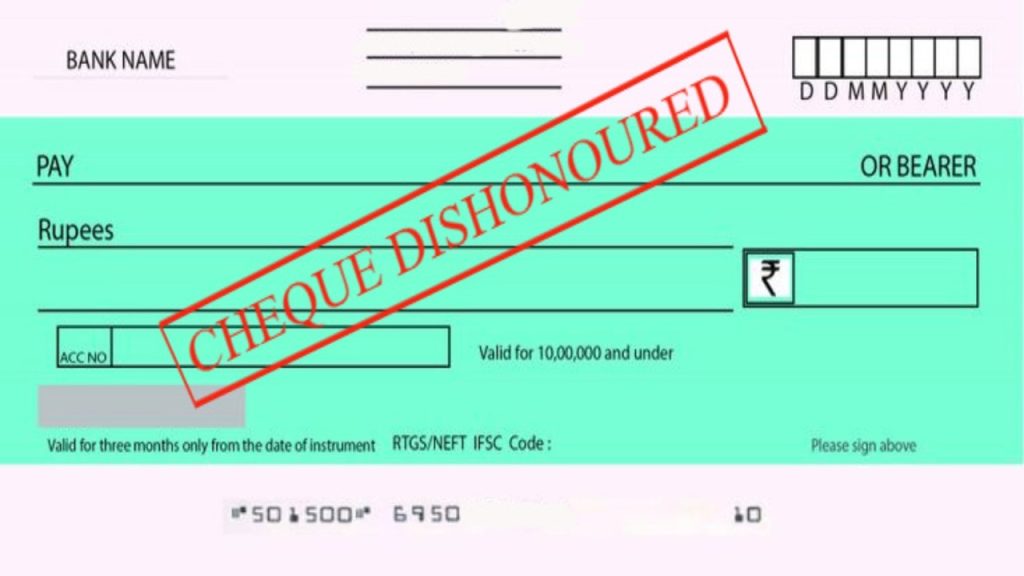
In India, a cheque bounce is not just a simple lapse in payment but a criminal offence under Section 138 of the Negotiable Instruments Act, 1881. The objective of the Law is to uphold the integrity of commercial transactions and ensure accountability in financial dealings.
⚖️ When does Section 138 of the Negotiable Instruments Act, 1881 apply?
When a cheque issued for the discharge of a legally enforceable debt or liability is dishonoured or returned due to insufficient funds, stop payment instructions, or account closure, amongst other reasons, the drawer (issuer) of the cheque can face criminal prosecution, subject to fulfilment of specific statutory preconditions.
⚖️ Understanding the procedural flow under this provision:
A complaint under Section 138 of the Negotiable Instruments Act, 1881 can be initiated only upon strict compliance with the following statutory requirements, which are to be fulfilled within the prescribed timelines:
1. Existence of a Legally Enforceable Debt – The cheque must have been issued in discharge (whole or part) of a legally enforceable debt or liability.
2. Presentation of Cheque with the banker – The cheque must be presented to the bank within three months from the date of issuance of the cheque.
3. Cheque returned dishonoured/unpaid – The cheque must be returned unpaid by the bank on account of the following reasons:
· Insufficient funds;
· Account closed;
· Exceeds arrangement;
· Any reason amounting to dishonour under the banking regulations.
4. Issuance of Demand Notice – The payee must issue a written demand notice to the drawer of the cheque, within thirty days of receiving the bank’s return memo, calling upon the drawer to make payment of the cheque amount.
5. Fifteen-Day Compliance Period – Pursuant to the receipt of the Demand Notice, the drawer is given fifteen days to make the payment.
6. Filing of Complaint – In the event the drawer fails to make payment within the fifteen-days, the payee may file a criminal complaint under Section 138 of the Negotiable Instruments Act, 1881 within thirty days from the expiry of the fifteen-day period.
These timelines are strict and mandatory; failure to comply may lead to dismissal of the complaint.
⚖️ Punishment upon Conviction
Upon conviction under Section 138 of the Negotiable Instruments Act, 1881, the court may impose:
· Imprisonment for a term which may extend upto two years, or
· A fine upto twice the cheque amount, or
· Both.
⚖️ Interim Compensation under Section 143A
To strengthen the efficacy of cheque bounce proceedings, Section 143A of the Negotiable Instruments Act, 1881 (introduced in 2018) empowers the court to direct the drawer to pay interim compensation to the complainant during the pendency of the trial. This provision serves two key objectives:
· Provides immediate relief to the aggrieved party, and
· Discourages delay tactics by drawers.
Key Highlights of Section 143A:
· Interim compensation can be awarded upto 20% of the cheque amount.
· The same must be paid within sixty days from the date of the order (extendable by another thirty days).
· If the drawer is acquitted, the complainant is required to refund the compensation with interest.
⚖️ Section 141 – Offence by companies
Under Section 141 of the Negotiable Instruments Act, 1881, when a cheque is dishonoured by a company, not only the company but every person in charge of and responsible for its conduct at the time of the offence can be held liable, including directors and officers—unless they prove lack of knowledge or due diligence.
Therefore, as can be seen, Section 138 acts as a deterrent against casual or dishonest issuance of cheques. It provides a fast-track criminal remedy, provided there is strict adherence to the prescribed legal procures.
FACING A SECTION 138 COMPLAINT? KNOW YOUR DEFENCES
Receiving a complaint under Section 138 of the Negotiable Instruments Act, 1881, can be overwhelming. However, a well-grounded legal defence can help protect your interests and potentially dismiss or mitigate the case.
⚖️ Key defences available under Section 138 cases:
· Absence of a Legally Enforceable Debt or Liability – For a Section 138 complaint to succeed, the cheque must be issued towards the discharge of a valid, legally enforceable debt or liability. If no such debt exists — for example, if the cheque was given as a gift, security, or for a transaction that does not constitute a debt — the complaint may be dismissed.
· Delayed Presentation of Cheque – The cheque must be presented to the bank for encashment within three months from the date of issuance. Failure to do so can render the Section 138 complaint invalid.
· Non-Issuance or Improper Service of Demand Notice – The payee is required to send a written demand notice to the drawer within thirty days of receiving the bank’s return memo. If this notice is not issued or is improperly served, it may be a valid ground for dismissal of the complaint.
· Failure to Comply with Statutory Payment Period – Pursuant to the receipt of the demand notice, the drawer must be allowed a period of fifteen days to make the payment. Filing the complaint beyond thirty days from the expiry of this period can lead to rejection of the case due to non-compliance with the timelines.
· Discharge of Debt – If payment has already been made or the liability is otherwise discharged, this must be shown to challenge the complaint.
· Concrete proof of the misuse of signed cheque(s) – If the drawer can provide evidence that a signed cheque was misused—such as being issued as a blank security cheque and later altered or that it was misplaced and then subsequently misused—this can rebut the presumption of liability under Section 138 of the Negotiable Instruments Act, 1881.
· Cheques issued in lieu of an illegal transaction – Cheques issued to cover illegal or unlawful transactions may not be enforceable under the Act.
· Declaratory Judgment passed prior to the initiation of proceedings under Section 138 of the Negotiable Instruments Act, 1881 – If the drawer has already obtained a civil court judgment declaring the cheque null and void (e.g., due to misuse, fraud, or absence of liability) before the Section 138 proceeding is filed, such a judgment can serve as a conclusive defence, effectively rebutting the presumption of liability.
While Section 138 of the Negotiable Instruments Act, 1881 is a powerful remedy for cheque dishonour, it is not complete. The law recognises several legitimate defences to protect individuals from wrongful prosecution.
⚖️ Your Legal Partner in Navigating proceedings initiated under Section 138 of the Negotiable Instruments Act, 1881
At TruLitt Attorneys, we provide comprehensive legal support in relation to matters arising from cheque dishonour – whether you’re initiating action as a payee or defending against a complaint under Section 138 of the Negotiable Instruments Act, 1881 as a drawer.
Our end-to-end services guide you through each step of the process:
· Issuance of demand notices;
· Legal advisory on compliance and timelines;
· Filing and prosecution of complaints
· Strategic defence in criminal proceedings;
We are committed to ensure that our clients’ financial rights are protected with utmost diligence and precision.
📩 Facing a cheque dishonour issue or need to defend a Section 138 complaint?
We’re here to help! Get in touch with us for trusted legal support and effective representation.